Executive functioning is the name for the things your brain does to help you be organised, make good decisions, and get things done.
There are quite a few executive functioning differences in autistic people, which really affect how we do things, although it is not just autistic people who experience differences with executive functioning!
We pay attention to things differently
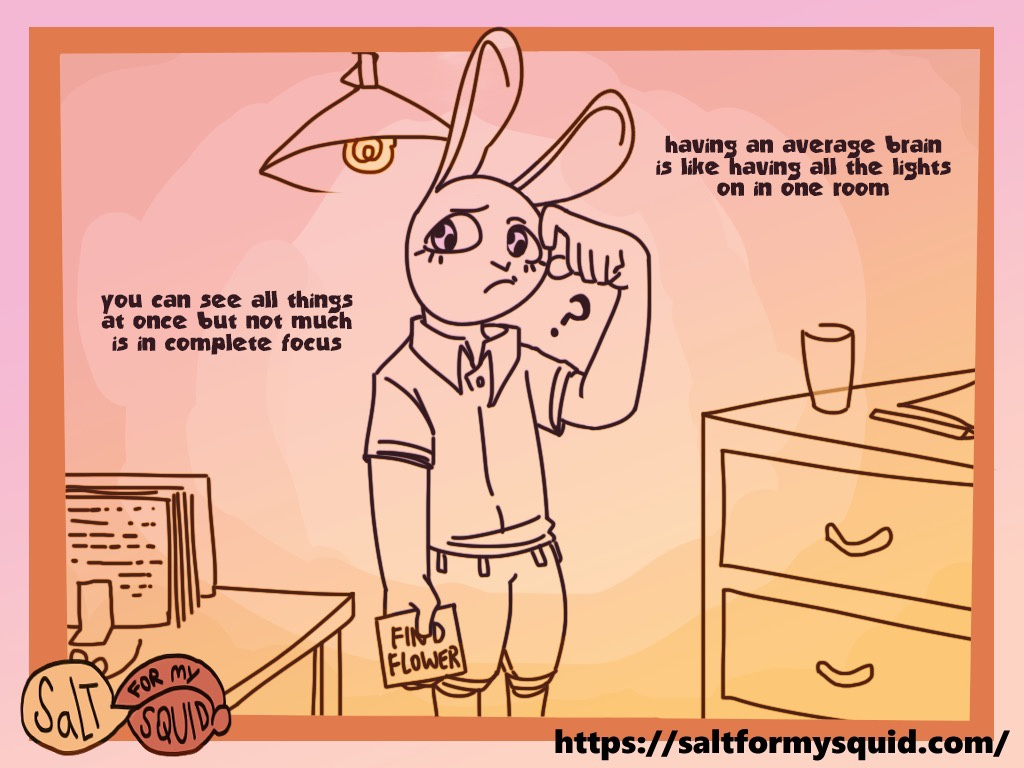
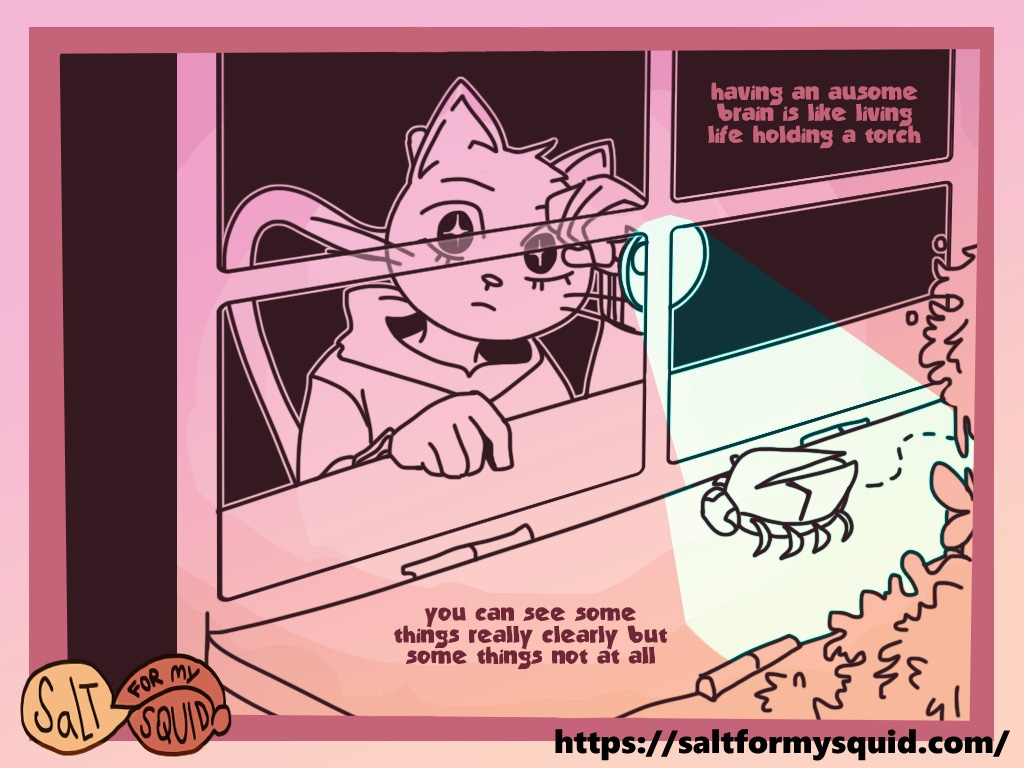
As Salt for my Squid says:
“Having an average brain is like having all the lights on in one room. You can see all the things but not in complete focus.
Having an ausome (autistic) brain is like living life holding a torch. You can see some things really clearly but some things not at all.”
You can read more about our attention differences in our article on monotropsim.
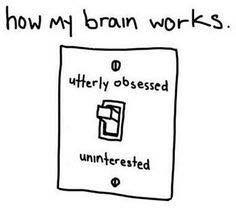
Having a monotropic brain means we can have incredibly deep interests. This can be one interest, interests that change over time or just a deep desire to understand new things in detail. In the same way that we are able to focus a lot of energy into something we are interested in, it can be much more difficult for us to focus on things that we are less interested in.
You can read more about this in our page on special interests.
Switching Tasks
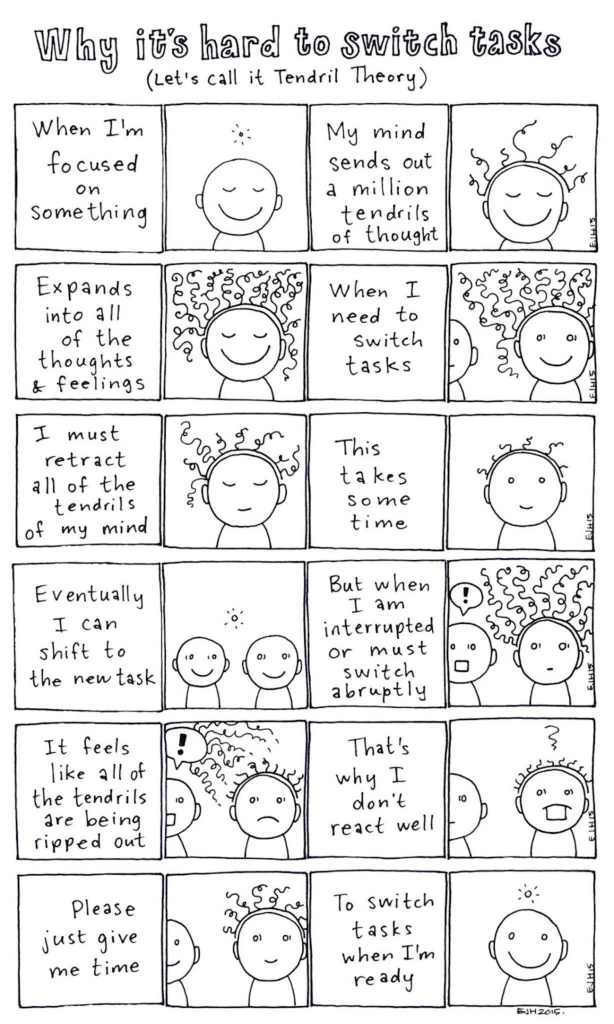
Because our brains are monotropic (they prefer to focus on a small number of things intensely), it can be very hard to switch from one task to another. This is because all of our brain power is focused on these things, and it needs time to unfocus, before refocusing on something else:
There are other reasons why switching activities can be hard too, read our article on Autistic Inertia for more information.
Impulse Control
Executive functioning also affects our impulse control. Sometimes, it can be really hard to not do impulsive things like grab shiny items, take a diamond on Minecraft or touch buttons you aren’t supposed to press! You may be judged for doing this when it isn’t always your fault!
Working Memory
We can also have differences in “working memory”. Working memory is like your brain’s “post-it notes” – where we remember bits of information for a short amount of time. Some autistic people have a very strong working memory where they can remember tons of things, some people have a much weaker working memory and can find it hard to keep instructions and details in their brain. This is linked to our information processing differences which you can read more about here.
Planning and Prioritising
Planning and prioritising is about working out what needs doing, in what order, and when.
It could be things such as:
- Deciding which art project, Lego set, or Minecraft build to work on today.
- Remembering to pack your bag before school or a trip.
- Deciding whether to stay in and revise for a test vs. go out to football/dance/drama practice.
Some autistic people may find it harder to organise their thoughts or plan ahead. Sometimes you can have everything you want to say/do in your brain, but it can feel “messy” and hard to work out how to actually do/say it. This means we can find planning and prioritising tricky because there are lots of steps to keep in your head at once (as we often process things very deeply!), and it’s easy to get stuck or forget things when your brain is very ‘full’.
Why it can feel hard:
- Everything feels equally important – so it’s tough to know where to start.
- Time can be confusing – a small job might end up taking hours, or you think a big job will be quick. It can also be difficult to ‘visualise’ how far something is in the future and how quickly that day/time will come around!
- It’s easy to get stuck or lost in hyperfocus – you start one thing and forget about the rest (or forget to eat…)
- Some tasks feel boring or overwhelming – which makes them harder to begin.
- When something feels like a demand – even if you want to do it, your brain and body might push back. This is sometimes called demand avoidance, and it can make starting or finishing a task feel really uncomfortable.
There isn’t one “right” way to plan or prioritise – what works best can be different for everyone. Trying out different tools and tricks can help you figure out what makes tasks easier to start, easier to stick with, and easier to finish. Some things might work straight away, while others need a bit of experimenting or adapting to suit you. Also sometimes something will work well for a little while and then you’ll need to find a new strategy – and that’s okay too!
Ideas that can help:
Digital tools:
- Goblin Tools: an app and website that can break big tasks into smaller steps. You type in something like “Clean my room” and it will suggest steps like → “pick up clothes” → “put books on shelf” → “vacuum floor”
- Habitica: turns your to-do list into a game where you earn points, level up your character, and get rewards for finishing tasks, it’s like an RPG but for getting stuff done.
- Finch: you earn rewards for completing routines and daily goals which you can then use to personalise your pet bird and its home.
- Google Calendar / Trello: great for keeping track of what you need to do and when. You can set reminders, deadlines, and visual boards to see everything in one place.
Practical strategies:
- Try to find places and spaces where you can use your brain to your advantage. Having to focus on lots at once may not work, but being in places where you can focus on a small number of things (especially your interests) can be really awesome.
- Post-it shuffle: Write each task on a sticky note. Move them from a “to do” column → “in progress” column → then “done” column. It feels good to physically move them across and you have a visual reminder of where everything is up to.
- Body doubling: Work alongside a friend, sibling, or adult (in person or even on a video call). Just having another person there can help you get started and keep going. Boring work or tasks can be more fun if you have someone to chat to.
- Break it down: If something feels too big, chop it into smaller steps. Even “find pen” and “open notebook” count.
- Timers and alarms: Use them to remind you when to start or stop, or to help you notice how long something really takes – although sometimes these can be really annoying and make demand avoidance worse, so they might not be helpful!
- Ask for written instructions: If spoken instructions are hard to remember, having them in writing means you can check back whenever you need.
- Ask for warnings before switching tasks: Can you ask people to give you a warning before switching tasks (e.g. once your game of Fortnite ends, it is time to do X), or give you time to adjust if there is an unexpected change of plan?
- Visual reminders: Use daily lists, post-its, calendars, or other visual cues to keep track of what you need to do.
- Object permanence trick: If there’s an object you need to complete a task, keep it in view! E.g. keeping a glass of water wherever you are working/playing will mean you’re more likely to remember to have a drink, than if you keep it somewhere out of sight.
- Chaining: while waiting for the kettle to boil when making a hot drink, you might find it easier to get something else done because you’re already on the move.
- Target smaller sets of tasks: if you store too many jobs you need to do in your brain, it will struggle to do anything! Can you set a target of achieving a smaller amount of tasks in one time period?
- Rule of three: 1) One quick win, 2) one must-do task, and 3) one positive/fun task – a simple way to balance your day.
- Start with a simple task first: Finishing one small task can help you feel motivated to keep going.
- Ask for extra time: Sometimes deadlines or tasks feel tricky because of time pressure – it’s okay to request more time if you need it.
Executive functioning differences can make some things harder, but they also bring strengths – like being able to focus deeply, notice details, or throw yourself into an interest. You can always ask for help/ support, or put your own support in place with anything you find difficult. Everyone’s brain works differently, so discovering your own ways of doing things can be part of the fun!